







If you’ve been on the fashion side of any social media site, you’ve definitely heard the term “capsule wardrobe” pop up. So what are capsule wardrobes?
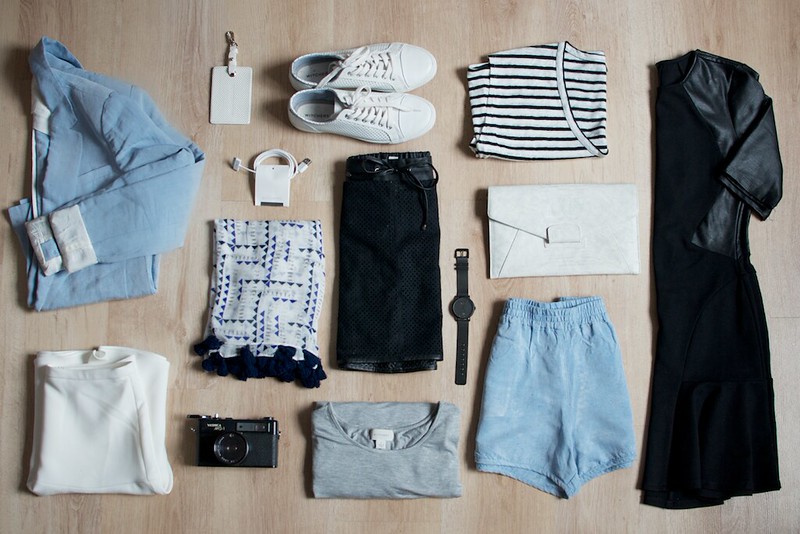
Capsule wardrobes are smaller, curated closets. Typically consisting of 20-40 individual pieces often in more neutral tones, they promote the idea that less is more. The point of the wardrobes is to discourage excessive consumption and fast fashion by being consistent in rewearing the same pieces, rather than buying new clothes every year. In addition to being neutral, pieces in capsule wardrobes are often sustainably made, high-quality (though not inherently expensive), and versatile. Capsule wardrobes are made to last.
Consuming less fashion, particularly less fast fashion, has a positive impact on the environment. The fashion industry is toxic for the environment; it’s one of the largest consumers of water, using up almost 100 billion cubic meters of water every year (excluding the water spent on washing clothes in daily life). The amount of water it takes to make a basic cotton shirt is the same amount of drinking water needed for two and a half years of a person’s life. The fashion industry is also responsible for ten percent of global carbon emissions, pollution in 20% of global freshwater, and more than twenty percent of the microplastics that pollute the ocean. Clearly, the fashion industry is not environmentally friendly.
While reducing the consumption of clothing doesn’t fix the way clothes are produced, if capsule wardrobes are carried out on a mass scale, it can lower the amount of clothing that is produced. Estimates say that eighty to one hundred and fifty billion pieces of clothing are produced every year, an excess of what is required to provide for roughly eight billion people on earth. It’s also estimated that about fifty seven percent of clothing created every year goes to landfills, with some additional percentage being incinerated, recycled, or otherwise discarded. Clothing that goes to landfills is often made of polyester, which can take up to two hundred years to decompose. The gap between clothing made and clothing needed is huge; as a result, the potential environmental impact of halving the fashion industry by a mass use of capsule wardrobes is also huge.
There are also major consequences of shrinking the fast fashion industry. The industry makes up four hundred and thirty million workers, nearly twelve percent of the global work force. The majority of these workers are employed by making clothes, many of whom make fast fashion (the kind of clothing that is rarely, if ever, included in a capsule wardrobe). If the industry’s production is halved, then fifty percent of employees will have their livelihoods put at risk, and likely turn to other equally environmentally unfriendly jobs.
In addition, a capsule wardrobe lifestyle is hard to maintain. A true capsule wardrobe relies on consistency from its wearer. It’s important to keep weight gain and loss in mind when curating it; buy pieces that utilize elastic waists, wrap dresses or skirts, adjustable straps and buckles, or shirring. Personal style also fluctuates, so relying on the same clothes over a long period of time means compromising on one’s preferences.
While a capsule wardrobe may require sacrifice, lowering the environmental impact of the fashion industry is a necessary measure in the fight against global warming. Capsule wardrobes are a start; from individuals alone, it’s not enough, but as a movement, it can make an impact. For higher impact, legal measures to limit the amount of clothing waste allowed and change the method of discarding excess clothing should be taken.
Sources
- https://www.instyle.com/how-to-build-a-capsule-wardrobe-5366609
- https://sustainablecampus.fsu.edu/blog/clothed-conservation-fashion-water
- https://www.fairplanet.org/story/how-the-fashion-industry-pollutes-our-water/
- https://justoneocean.org/portfolio/the-fashion-industrys-impact-on-the-ocean
- https://www.vogue.co.uk/article/how-many-clothes-produced
- https://businesswaste.com/waste-types/textile-waste/textile-waste-facts/
- https://bestcolorfulsocks.com/blogs/news/global-fashion-industry-employment-statistics?srsltid=AfmBOoosJGWF9L0miar-lCxNuwyBOQWjJMR39vCt5B_oMGg9Zd898ijB
Photo: https://www.flickr.com/photos/66755335@N05/11050192686/in/photostream/